
Description
About This Book
In The Sum of Yesterdays, I see my writing as a natural and more reflective evolution from my earlier work, Write Feelings. While that first book leaned towards emotional release and catharsis, this collection settles into a quieter, more contemplative rhythm — one that values observation over urgency and reflection over reaction.
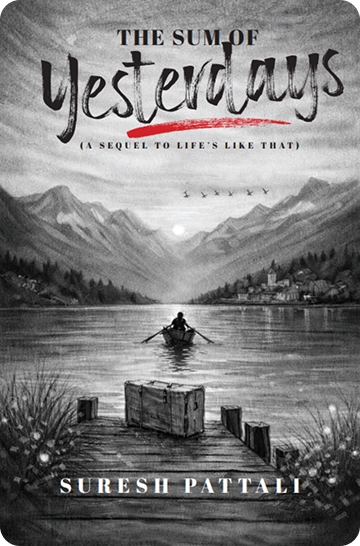
The image of a boat gently drifting downstream, echoing life as a dream, best captures this shift in my tone. I am no longer writing to unburden myself; I write to understand, to linger, and to interpret. This unhurried pace allows me to step back from immediate experience and notice what often goes unseen. These essays are not outpourings, but carefully held moments — examined, turned over, and then shared with quiet sincerity.
What I have consciously tried to do is elevate the ordinary. I draw from small, everyday incidents — a trivial family disagreement or the simple pleasure of a solitary cup of filter coffee — and allow them to open into reflections on larger, even metaphysical questions. To me, life’s deeper meanings are not hidden in grand events, but embedded in the textures of daily living.
I also wanted these essays to carry a sense of universality. By presenting what I feel are pages drawn from everyone’s life, I hope readers can see themselves within my narratives. The experiences may be personal, but the emotions and reflections, I believe, are widely shared—giving each piece a depth that may reveal something new with every reading.
In terms of style, I find myself drawn to the reflective essay tradition of writers like A. G. Gardiner and C. P. Snow. Like them, I prefer clarity and restraint over flamboyance. I do not seek to dazzle; instead, I let meaning emerge gradually, like a quiet symphony shaped by subtle shifts in tone and mood. In that sense, I think of The Sum of Yesterdays as a kind of concert of words, where the essays come together in a shared meditation on life’s contradictions — its absurdities, its quiet joys, and its unanswered questions.
Ultimately, this book is less about offering answers and more about cultivating a way of seeing. Through it, I hope to invite readers to slow down, to observe more closely, and to discover meaning in the overlooked corners of their own lives—because I believe the past, when revisited with care, has a way of illuminating the present in unexpected ways.
Reviews
There are no reviews yet.